
The Institute for Currency Studies
How currency shapes our world.
What role does our global currency play in our everyday lives?
From school to environmental care, to health and well-being, currency not only shapes our way of life — it is a reflection of it.
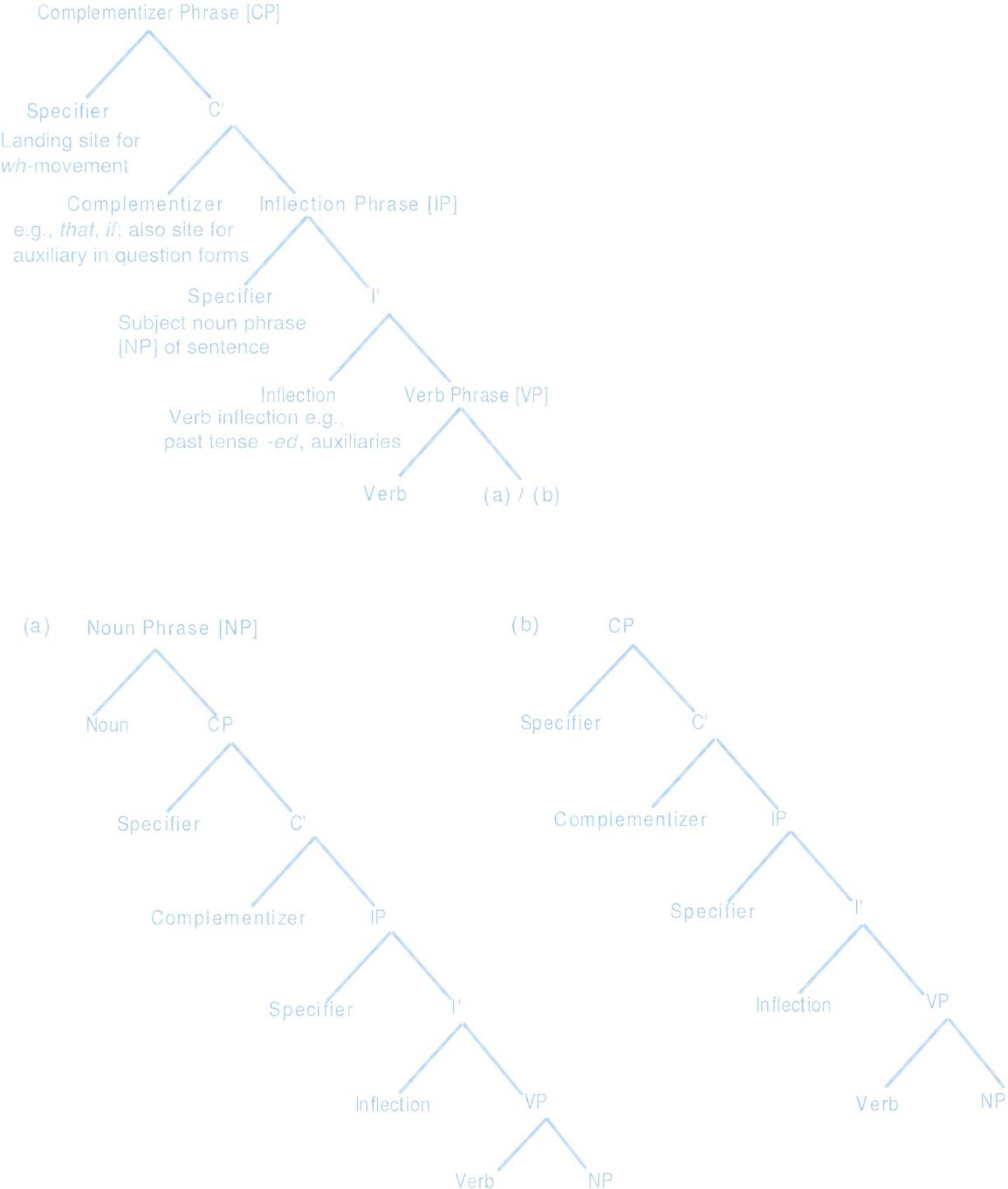
In Syntactic Structures (1953), Noam Chomsky provides a fascinating window into the structure of syntax — how we form our sentences — and the very nature of thought as precise, rule-oriented trees in formation.
But what is the origin of the formation itself? Chomsky has sought to identify the source of the pattern upon which human cognition operates. While this pattern is made evident in large language models used to form artificial intelligence, it is neither the same, nor as efficient in problem solving as the human design. In fact, the human brain was recently found to be 225,000 times more energy efficient than the large language models used by AI.
Was the template for human thought created via the installation of the Pythagorean Solids or the seven-note Diatonic Scale? Or was the template created utilizing something much more basic, much more rudimentary? Anthropologic evidence indicates the pattern of human thought indeed emerged from a single premise: I.
Interpretations of the allegory of Plato’s cave show us that prisoners view only the projection of shadows on a cave wall presented before them; once the prisoners are released, the world illuminated by the sun presents a new reality. Perhaps, this is a third-dimensional reality contrasted with the two-dimensional nature of reality presented to us by the mind operating on a binary codex.
The mind presents to us the notion of self, and other. It is this one right angle that empowers the Solomonic cube Pythagoreas assigned to earth, and the entire structure of speech upon which human cognition has operated for centuries. It is only the idea of self and other that empowers the human mind to operate on a series of cubes, known as logic.
All of human logic exists on the assumption that one part must be true. Without this single truth as a causation, all logic fails. The truth upon which modern human circuitry runs in order to empower a debt-based relational system, is the idea of a separate self. It is this idea of a separate self that empowers the idea of guilt, or debt.
Philosophers and neuroscientists such as Daniel Dennett and Thomas Metzinger argue that the "self" is not a physical entity but a functional, cognitive interface—a computational representation the brain uses to navigate the world. If so, from where does the pattern emerge, and what are the conditions for its evolution?